
Single-Tasking Mode
In high-stakes environments where the margin between mission success and catastrophic failure is measured in milliseconds, cognitive efficiency is a survival mechanism as much as a productivity hack.
The deliberate allocation of full cognitive and physical resources to one specific task until completion or a defined strategic stopping point. More than “focusing better”, it’s a tactical protocol that maximizes operational capability, reduces error rates, and preserves decision-making bandwidth under pressure.
For covert operatives, military personnel, and law enforcement, the ability to enter Single-Tasking Mode on demand separates professionals from casualties and tradecraft from unproductive.
The Cognitive Cost of Fragmented Attention
Despite how well you think you can multi-task, your actual brain doesn’t multi-task. It task-switches – rapidly toggling between competing demands, burning glucose and neurochemical resources with every context shift. Research in cognitive psychology demonstrates that even brief interruptions (the buzz of a radio, the ping of a secondary comms channel, the mental residue of an unfinished report) can degrade performance by 40% or more.
In operational contexts, this degradation manifests as:
- Delayed threat recognition – the half-second that costs you initiative. By the time danger becomes obvious, the opportunity to avoid or control it may already be closing.
- Compromised situational awareness – missing the anomaly because your attention was split. Divided focus allows critical changes to blend into the background until they become immediate problems.
- Decision fatigue – poor judgment calls made with depleted executive function. As mental resources decline, the mind defaults to shortcuts, impulsive choices, and familiar responses that may not fit the situation.
- Motor skill degradation – fine motor control requires singular focus; split attention introduces tremor and hesitation. As cognitive demand rises, precision deteriorates first, turning familiar movements slower, rougher, and less reliable.
Multi-tasking is a myth sold to civilians juggling emails and spreadsheets. In your world, it’s a liability. Attention doesn’t quite divide cleanly, it switches between demands, losing speed and accuracy with every transition. Under pressure, that accumulated delay creates blind spots precisely when clarity matters most.
Single-Tasking Mode: The Operational Framework
Despite it’s solo focus objective nature, single-tasking is not passive – it’s an active system with four phases. Each phase protects attention from competing demands and directs it toward one defined objective. The sequence establishes priority, controls execution, and creates a deliberate point for reassessment. Repetition turns the system into a reliable response when pressure makes improvisation costly.
1. Task Definition
Before engagement, define the objective with specificity. “Surveil the subject” is vague. “Maintain visual on target entry/exit for 45 minutes, document all contacts, radio check every 15” is actionable. A defined endpoint also makes it immediately clear when the task is complete or conditions require reassessment.
2. Environmental Lockdown
Before execution begins, remove every avoidable source of interruption from the immediate environment. Silence unnecessary devices, close unrelated channels, and arrange essential tools within reach so attention never has to leave the task. Eliminate or suppress non-essential inputs:
- Comms to standby channels (not off, controlled)
- Notifications silenced
- Physical space secured against interruption
- Mental closure on competing priorities (the “parking lot” technique – acknowledge, note, defer)
A controlled environment preserves cognitive capacity for the variables that can’t be eliminated.
3. Deep Engagement
Enter the task with full sensory commitment. This is where operatives distinguish themselves – the capacity to narrow the aperture of consciousness to the immediate operational requirement while maintaining peripheral awareness through training instead of distraction.
Relevant signals receive deliberate attention, everything else remains background until conditions require reassessment. Depth of focus creates precision without allowing concentration to harden into tunnel vision.
4. Strategic Exit
Single-Tasking Mode has a defined endpoint: mission complete, handoff achieved, or deliberate pause for reassessment. Exiting without closure creates “attention residue”, the cognitive hangover that impairs the next task. Record the outcome, secure unfinished details, and establish the next action before redirecting your focus.
A disciplined exit clears the mental workspace so the following task receives undivided attention.
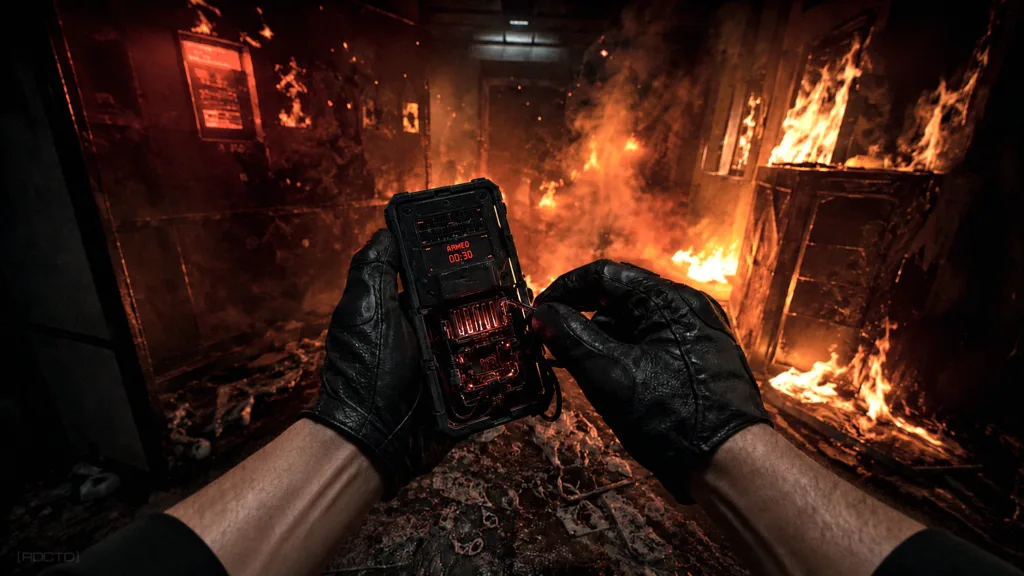
Multi-Tasking vs. Single-Tasking: The Tactical Comparison
Multi-tasking creates the appearance of speed by keeping several demands active at once. Single-tasking produces actual speed by concentrating cognitive resources on one objective until a defined transition point. The distinction becomes critical under pressure, where every shift in attention carries a measurable cost.
| Dimension | Multi-Tasking | Single-Tasking Mode |
|---|---|---|
| Cognitive Load | High – constant context switching burns executive function | Optimized – resources concentrated on one vector |
| Error Rate | Elevated – missed details, procedural mistakes | Minimized – full attentional capture on target |
| Situational Awareness | Fragmented – surface-level monitoring of multiple inputs | Deep – nuanced pattern recognition and anomaly detection |
| Stress Response | Amplified – cortisol spikes from divided attention | Controlled – predictable workload, managed arousal |
| Decision Quality | Reactive – snap judgments under cognitive debt | Deliberate – calculated responses with full information |
| Recovery Time | Extended – mental fatigue accumulates | Efficient – clear boundaries allow cognitive reset |
The Verdict: Multi-tasking creates the illusion of competence. Single-Tasking Mode delivers actual capability. When breaching a door, conducting a sensitive source meeting, or analyzing intelligence under deadline, the operator in Single-Tasking Mode will see what others miss, react faster, and make fewer fatal errors.
Implementation for Tactical Professionals
Pre-Mission
- Conduct a “cognitive sweep” – close or delegate all non-essential threads before stepping off
- Brief your team on Single-Tasking protocols; interruptions should be reserved for genuine emergencies
- Use checklists to externalize memory, freeing mental bandwidth for improvisation
During Operations
- Assign dedicated roles: one operator on comms, another on surveillance, another on documentation – never double-hat critical functions
- Build “focus blocks” into the timeline: 20-45 minutes of protected attention on complex tasks
- Recognize the “twitch” (the urge to check secondary channels) and suppress it
Post-Operation
- Debrief with attention to cognitive load: where did fragmentation occur? What interrupted flow?
- Practice “attention hygiene” – deliberately single-task during recovery to rebuild capacity
Tasking Tactics
- Define the Finish Line: Before starting, specify the exact condition that marks completion. An undefined endpoint encourages drift, unnecessary refinement, and premature task-switching.
- Externalize the Queue: Record competing tasks immediately instead of holding them in working memory. Once captured, they stop demanding rehearsal and consuming attention needed for the current objective.
- Control Transition Points: Switch tasks only at deliberate checkpoints rather than whenever a new stimulus appears. Planned transitions reduce attention residue and preserve continuity across the work cycle.
- Use an Interruption Protocol: When interrupted, record your current position, unresolved question, and next action before disengaging. This creates a precise reentry point and prevents time being wasted reconstructing context.
- Work in Closed Blocks: Assign one objective to a protected period with a clear beginning and end. Short, fully committed blocks often outperform longer sessions weakened by intermittent distraction.
- Separate Monitoring From Execution: Establish fixed intervals for checking messages, updates, and secondary information streams. Constant monitoring keeps the mind in a shallow state and prevents sustained engagement.
- Match Difficulty to Capacity: Schedule high-consequence decisions for periods when your attention and energy are strongest. Reserve routine administration for lower-capacity windows so fatigue does not determine important outcomes.
- Install a Reset Ritual: Between tasks, take a brief pause to document closure, regulate breathing, and restate the next objective. A consistent reset helps the brain release the previous demand before accepting another.
- Set Abort Criteria: Decide in advance which conditions require a pause, handoff, or complete reassessment. Predetermined thresholds prevent exhaustion, frustration, or sunk costs from quietly degrading judgment.
- Audit Attention, Not Just Results: After completion, note when focus weakened, what caused it, and how quickly it recovered. Repeated review exposes distraction patterns that outcome-based evaluation alone will miss.

The Strategic Advantage
In an era of constant connectivity, the ability to disconnect from everything except the immediate mission is a force multiplier. Your adversaries are distracted, their attention is fragmented by the same devices and demands that plague civilian life.
Single-Tasking Mode is your asymmetric tradecraft advantage. While they split their focus, you bring the full weight of your training, experience, and cognitive capacity to bear on a single point of decision. Concentrated attention converts that difference into faster recognition, clearer judgment, and more reliable execution.
The mission doesn’t require you to do everything at once, just the critical thing completely.
Enter Single-Tasking Mode, execute with precision, then exit clean.
For operators who understand that focus is a weapon.
[INTEL : Anti-Procrastination Triggers: CIA Productivity Hack]