

The Tradecraft of Genghis Khan: Lessons For The Modern Era
A sophisticated blend of military strategy, psychological warfare, and leadership, offers timeless insights into the power of fear and its application across various modern contexts.
Genghis Khan, one of history’s most formidable conquerors, employed a blend of military genius, psychological warfare, and statecraft that enabled him to establish an empire that stretched from the Pacific Ocean to the heart of Europe.
His tradecraft, deeply rooted in the nomadic warrior culture of the Mongols, offers timeless lessons in strategy, leadership, and adaptability that can be applied in various contexts today, from corporate boardrooms to personal development.
Genghis Khan’s ability to conquer vast territories stemmed from his unparalleled military strategy, organizational genius, and psychological warfare. He revolutionized the Mongol army by implementing a merit-based system, ensuring that the most capable leaders, regardless of their origins, rose to command positions.
His use of highly mobile, disciplined cavalry units allowed for rapid, unpredictable movements that overwhelmed slower, traditional armies. Additionally, Genghis Khan employed psychological tactics, such as spreading terror through ruthless massacres and propaganda, which often led to enemy cities surrendering without a fight.
His innovative communication network, using mounted couriers, ensured efficient coordination across his sprawling empire, enabling him to maintain control over conquered regions and swiftly respond to threats.
This combination of tactical brilliance, strategic innovation, and psychological manipulation allowed Genghis Khan to forge one of the largest empires in history.
Mastery of Mobility and Speed
Historical Application
Genghis Khan’s forces were renowned for their incredible mobility and speed. His cavalry could cover vast distances at a pace that was unprecedented at the time, allowing for rapid deployment and surprise attacks that confounded his adversaries.
Modern Application
In today’s fast-paced world, the ability to quickly adapt to changing circumstances and seize opportunities can be a significant advantage. This emphasizes the importance of flexibility and agility in strategies, whether in business, technology, or personal goals. Being able to pivot quickly in response to unforeseen challenges is akin to the Mongol cavalry’s rapid maneuvers on the battlefield.
Use of Intelligence and Espionage
Historical Application
The Mongol empire’s expansion was not merely a result of brute force; it was also underpinned by sophisticated use of intelligence and espionage. Genghis Khan valued information about his enemies’ movements, strengths, weaknesses, and strategies, which he gathered through a network of spies and scouts.
Modern Application
The importance of information in decision-making cannot be overstated. In the corporate world, market research, competitive intelligence, and data analytics play roles similar to the scouts and spies of Genghis Khan’s army. Making informed decisions based on comprehensive analysis of available data is crucial in navigating the complexities of modern business and personal endeavors.
Psychological Warfare
Historical Application
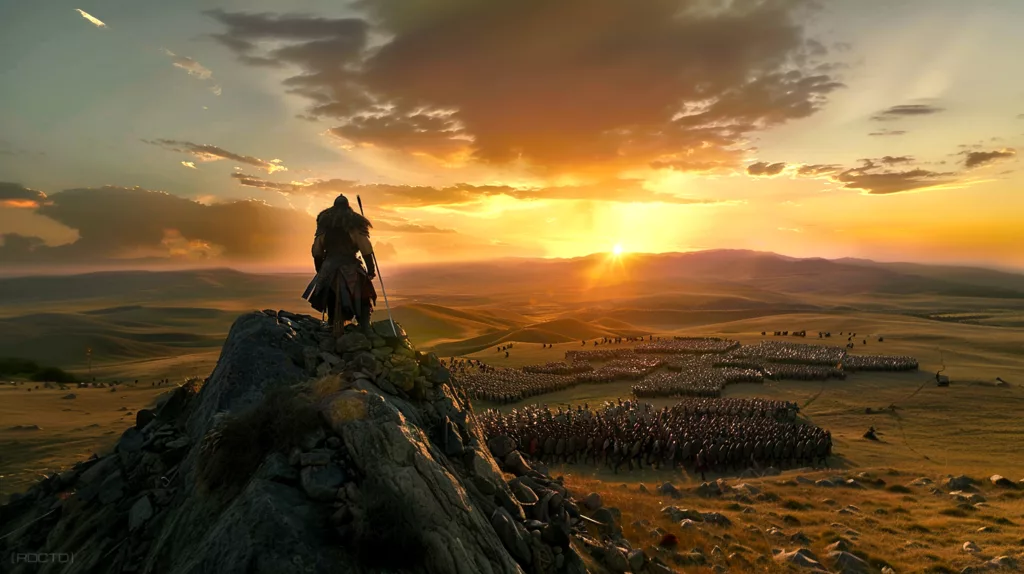
Genghis Khan utilized psychological warfare to great effect, often sowing fear and demoralization among his enemies before a single arrow was fired. The reputation of his mercilessness preceded him, causing some adversaries to surrender without a fight.
Modern Application
While the ruthless aspects of psychological warfare are not applicable in a civilized context, the principle of shaping perceptions to achieve a strategic advantage is relevant. In business, branding and marketing efforts aim to influence perceptions and behaviors. On a personal level, cultivating a strong, confident presence can impact personal and professional relationships, negotiations, and leadership.
Meritocracy and Loyalty
Historical Application
Unlike many of his contemporaries, Genghis Khan promoted individuals based on merit rather than aristocratic birth. This not only ensured that the most capable leaders were in positions of power but also fostered loyalty and dedication among his troops.
Modern Application
The principle of meritocracy is fundamental in creating efficient and innovative teams and organizations. Recognizing and rewarding talent, effort, and results cultivates an environment where individuals are motivated to excel. Similarly, in personal growth, acknowledging one’s strengths and weaknesses allows for a more focused and effective development strategy.
Adaptability and Learning
Historical Application
Genghis Khan was not only a master of war but also an adept learner. He and his Mongols adopted new technologies, administrative practices, and even cultural elements from the peoples they conquered, enhancing their own capabilities and governance.
Modern Application
The willingness to learn from others, adapt to new information, and incorporate diverse perspectives is essential in today’s interconnected and rapidly changing world. This applies to both organizations striving for innovation and individuals seeking personal growth. Embracing change and learning from both successes and failures are key to sustained advancement.
The tradecraft of Genghis Khan, characterized by strategic mobility, intelligence gathering, psychological operations, meritocracy, and adaptability, transcends the centuries to offer valuable insights for contemporary challenges.
By analyzing and applying these timeless strategies, modern professionals and individuals can navigate the complexities of their environments more effectively, drawing inspiration from one of history’s most successful leaders.
[INTEL : How to Engage and Defeat Adversaries Smarter Than You]