
10 Street Habits That Make You Look Like Prey
There’s a hard truth in street-level tradecraft: most trouble doesn’t start with words – it starts with selection.
Predatory people scan fast for signals that say “easy win.” The good news is those signals are mostly habits that you control, and habits can be changed.
This intel covers 10 common habits that make you look like prey in the streets of urban environments, why they work against you, and the small tradecraft tweaks that flip the signal.
Looking Impaired or Exhausted in Public
Visible impairment is a green light for opportunists – stumbling, glassy eyes, sloppy balance, delayed reactions, or that “half-asleep” shuffle after a long day. You don’t have to be drunk, being wiped out, zoned out, or sick can produce the same signals. Predatory people aren’t hunting a challenge, they’re hunting reduced resistance and slow decision-making. This flags you as someone operating behind the decision curve. Once you look slow to perceive or act, you become a lower-risk option in their selection process.
If you look like you won’t clock a problem until it’s on top of you, you’ll get more unwanted attention. In street tradecraft terms, impairment collapses your reaction window and makes your behavior easier to predict. Predictability lowers their risk, and low risk is what draws them in.
PRO TIP: If you’re not 100%, tighten your plan. Stick to well-lit routes, keep your phone away while moving, and use “safe waypoints” (storefronts, lobbies, staffed counters) to reset instead of pushing through empty stretches.
Looking Confused and Lost While You Move
When you’re in an unfamiliar area and you’re obviously unsure (stopping mid-sidewalk, turning in circles, checking street signs repeatedly, staring at your phone like it’s a lifeline), you broadcast that you don’t know where you are and you’re mentally overloaded. That combo screams “low situational awareness.” Predators interpret that overload as opportunity, because attention spent navigating means attention not spent detecting approach, intent, or timing.
Opportunists love it because it means you’re less likely to notice them closing distance, less likely to react quickly, and more likely to follow bad directions. Even worse, the “lost” look often comes with hesitant, choppy movement, which signals you’re not committed to a plan. Predators don’t want a fair fight, they want someone already off-balance.
PRO TIP: Before you step out, anchor a simple route (even 2–3 checkpoints). If you need to check your phone, do it with your back to a wall or inside a doorway, then move with purpose like you’ve got somewhere to be.
Avoiding Eye Contact Like You’re Afraid of It
People confuse eye contact with aggression, so they drop their gaze, stare at the ground, or “ghost” anyone around them. The problem is that fear-of-eye-contact reads as fear-of-people. It tells the wrong person you’re uncomfortable asserting space, you don’t want to be noticed, and you probably won’t challenge them if they test you. In predatory dynamics, that’s an invitation. Confident individuals don’t stare people down, but they also don’t look like they’re trying to disappear.
Calm, brief eye contact says, “I see you,” which is often enough to make someone choose a different target. It also establishes a baseline that you’re alert and tracking movement, not lost in your own head. That single acknowledgment forces anyone sizing you up to account for resistance instead of assuming compliance.
PRO TIP: Practice a neutral “check” – quick eye contact, relaxed face, then look away like you’re busy. Think calm acknowledgement, not a glare.
Bad Posture That Signals Low Confidence
Slumped shoulders, a dipped head, short steps, dragging feet, hands tucked in, or a body that looks “collapsed” sends a loud message: you’re not ready. Posture isn’t just vibe, it’s a prediction. People assume a slouched person is tired, distracted, uncertain, or less likely to resist. Predators read that as low cost. Good posture also changes how you move: upright posture gives you better peripheral vision, faster turns, and a stronger base. Poor posture shrinks your presence and slows your response time, which makes you look easier to control.
It also degrades awareness, because your head position limits what you can see and how fast you process movement. In street tradecraft, posture is an early tell of whether someone is switched on or already yielding ground.
PRO TIP: Reset your frame: shoulders back and down, chin level, eyes up. Walk like you’re late to something important – steady pace, clean steps, no drifting.
Walking Distracted With Your Hands Occupied
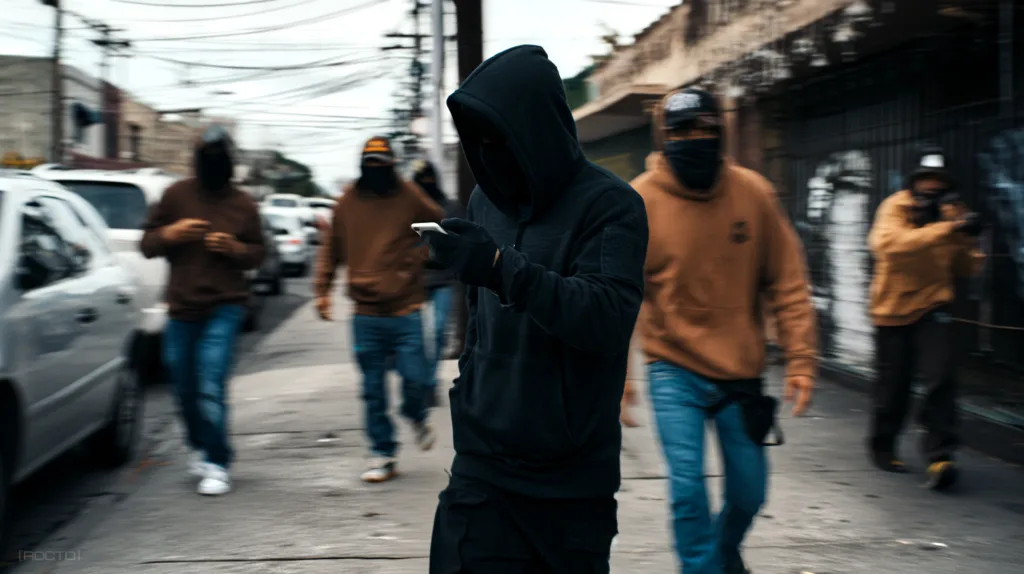
Headphones in both ears, eyes glued to your phone screen, doom-scrolling at crosswalks, carrying too much in your hands – it all signals the same thing: “I’m not tracking you.” Distraction is basically permission for someone to get close before you notice. And when your hands are busy, you lose options: you can’t create distance, you can’t gesture confidently, you can’t react quickly, and you can’t even protect your personal space without fumbling.
Predatory people don’t need you helpless, they just need you late to the moment when you realize what’s happening. In the streets, being late to the moment is often the only opening they need.
PRO TIP: Keep your head on a swivel and your phone put away while moving. If you use audio, go one ear only or low volume. Keep at least one hand free and stop in a safe spot before handling tasks.
Being Too Polite When Someone Crosses Your Boundaries
This one’s a killer habit: smiling when you’re uncomfortable, laughing off weird behavior, letting strangers stand too close, apologizing when they intrude, or answering personal questions you don’t want to answer. Predators bank on social rules – they know many people would rather be “nice” than be safe. Over-politeness signals you’ll tolerate pressure, you’ll negotiate your own boundaries away, and you’ll hesitate to escalate your response.
That hesitation is exactly what they’re shopping for. Strong targets don’t pick fights; they simply don’t offer openings. Every unnecessary courtesy buys the other person time and proximity. Time and proximity are leverage, and leverage is what turns a minor intrusion into a problem.
PRO TIP: Rehearse simple boundary lines so they come out clean: “No.” “Can’t help you.” “Back up.” Pair it with movement (step away, change direction) and a steady voice – calm, not apologetic.
Fumbling at “Transition Points” (Doorways, Cars, ATMs)
Predatory types love transition points because people get task-fixated right there: digging for keys, tapping a screen, counting cash, wrestling a door, loading a trunk. Your head goes down, your hands get busy, and your awareness narrows to one problem you’re trying to solve. That’s a clean “selection” signal in street tradecraft: you’re stationary, distracted, and a step late to whatever’s developing around you.
Even in safe neighborhoods, that moment of fumbling makes you look easier to crowd, pressure, or surprise. These moments also limit your ability to move decisively, because you’ve already surrendered balance, space, and initiative. Once that happens, the other person controls the tempo, and you are reacting instead of deciding.
PRO TIP: Stage your moves. Have keys in hand before you hit the door or car, pick ATMs in well-lit, higher-traffic spots, and if you feel off, abort the task and reposition instead of forcing it.
Letting Strangers Collapse Your Personal Space
If someone’s inside your bubble and you don’t correct it (especially face-to-face) you’re signaling compliance. Most decent people respect distance automatically, the ones who don’t are often testing whether you’ll enforce boundaries. When you stay planted and let them close, you’re giving them control of proximity, angle, and timing – you’ve surrendered positional advantage before anything has even been said.
That hands them initiative, which in the streets is never neutral. That reads as “manageable,” which is exactly what a predatory personality wants before they push for more: a question, a favor, a distraction, a hand in your space.
PRO TIP: Own your distance early. Take a small step back on the first encroachment, angle your body (don’t square up), and use a simple line like, “Yo, give me some space,” in a steady, normal tone.
Broadcasting Anxiety Through “Nervous Movement”
Rapid head swivels, clutching your bag, speeding up suddenly, crossing the street three times, flinching at every passerby – those behaviors don’t read as awareness, they read as fear. Fear has a look: tight shoulders, shallow breathing, jittery steps, and a face that’s scanning for danger like it expects to be hit. To the right observer, that signals internal chaos and poor self-regulation. It marks you as reactive instead of deliberate, which lowers the perceived cost of testing you.
The wrong person interprets that as you being mentally flooded and easier to steer. Calm confidence tends to repel attention, frantic energy tends to attract it. In street smart terms, you’re signaling loss of internal control, which invites external pressure.
PRO TIP: Regulate first, then move. Slow your pace slightly, drop your shoulders, breathe low, and make one deliberate decision (change direction once, step into a busier area, enter a shop) instead of doing a panicked zig-zag.
Freezing When Approached (Letting People “Interview” You)
A lot of street trouble starts as a conversation you didn’t choose. If someone approaches and you stop dead, turn fully toward them, and start answering questions, you’ve handed them tempo and positioning. Predatory people use quick “interviews” to see if you’ll comply, whether you’re alone, how switched-on you are, and how close they can get before you resist.
The freeze response (polite smile, locked feet, nervous answers) reads like a person who can be managed. Once you engage on their terms, you’re no longer navigating the environment but being worked inside it, and that shift is often the real opening they were waiting for.
PRO TIP: Keep your feet and your options. Use a moving boundary: “I’m late, can’t stop,” while you keep walking, and if they track you, change direction toward people, light, and cameras instead of negotiating in place.
Predators don’t pick targets at random, they run quick mental math on potentials and go after the easiest prey.
That’s the whole game: selection. The point of this intel is control. Fix the habits that broadcast distraction, hesitation, and low confidence, and you’ll feel the shift fast – fewer “tests,” fewer weird approaches, less pressure in public. Real street tradecraft is boring on purpose. Move with intent, keep your awareness up, and make it obvious you’re not the kind of person who can be managed.
[INTEL : 21 Factors of Being a Hard Target Like a Covert Operative]
[OPTICS : The Bronx, New York City]